Background

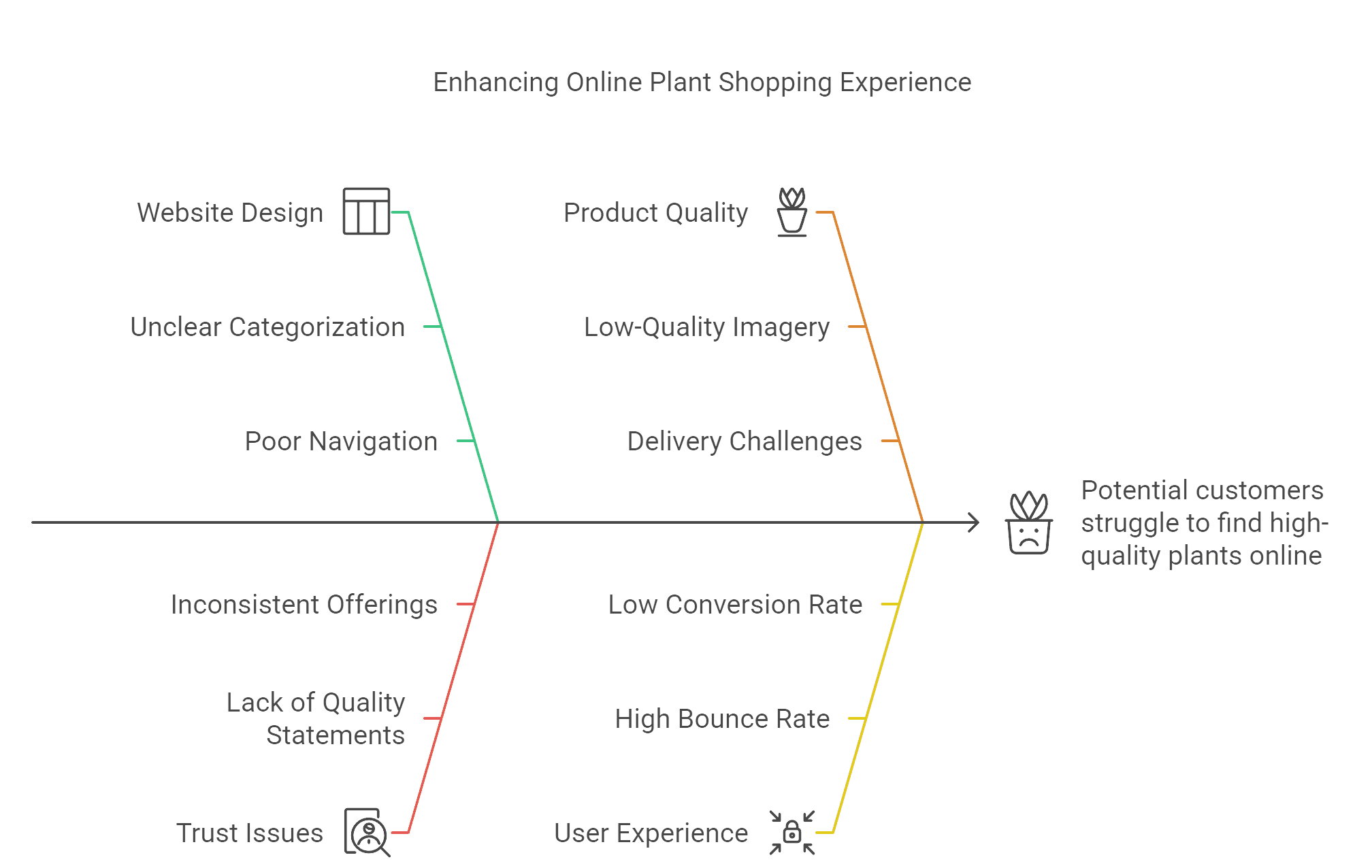
Problem: (Inferred based on market analysis) My research into the Indian online plant market indicated potential customers faced challenges easily discovering specific, high-quality plants online and often lacked trust due to common industry issues with plant health upon delivery and inconsistent information.  

My Solution (at a High Level): I designed a website concept (represented by the Plantique/Verdurely mockups) featuring a clean, visually engaging interface. My key strategies included establishing a strong brand voice, prioritizing clear categorization and navigation, showcasing high-quality product visuals, building trust through explicit quality messaging and social proof, and fostering community engagement.  

Key Outcome & Impact (Projected Goals): My design aimed to significantly improve user engagement with product categories, increase conversion rates by building trust and simplifying discovery, and reduce bounce rates by offering a more intuitive and appealing online experience compared to potentially cluttered or less trustworthy competitor sites. (Specific metrics are projected goals).
The Challenge

Business Context: Plantique operates within India's rapidly growing online plant retail market, driven by urbanization and increased interest in home gardening and wellness. Key challenges in the market include logistics for live plants, ensuring quality, and overcoming customer service issues prevalent among some competitors. Plantique aimed to position itself as a reliable source for quality houseplants and accessories.  

User Pain Points (Inferred from Market & Design):

  • Discovery Difficulty: Users likely struggled to navigate large catalogs or find specific plant types (e.g., pet-friendly, low-light) easily on less organized competitor sites.  

  • Quality Concerns: Hesitation to buy plants online due to market-wide issues with receiving unhealthy or damaged plants.  

  • Lack of Guidance: Difficulty finding reliable care information or understanding which plants suit their environment.  

Technical Constraints (Hypothetical): Integrating high-quality imagery without slowing page load times; ensuring accurate mapping of plants to categories and filters; responsive design for various devices.  

Key Metrics Before (Hypothetical Baseline): Assumed baseline likely included a high bounce rate on the homepage, low click-through rates on category links, and potentially low conversion rates attributed to user uncertainty or difficulty finding suitable products.

Strategic Focus

Design Principles & Philosophy:

  • Visual Appeal & Quality Focus: Reflecting the nature of the product and building brand perception around quality.  

  • Clarity & Intuitive Navigation: Making it easy for users, including novice plant owners, to find what they need.  

  • Trust Building: Proactively addressing potential user concerns about online plant purchasing through transparency and information.  

  • Content Integration: Blending product showcase with helpful information (like categorization by need, care details inferred from structure)

Key Strategic Decisions (Rationale Inferred from Design & Market Best Practices):

  1. Prominent & Clear Categorization:

    Why? To immediately orient users and allow quick navigation to relevant sections (Indoor, Outdoor, Pet Friendly etc.), addressing discovery difficulty.

    Trade-off: Requires careful selection of the right top-level categories.


  2. High-Quality Imagery & Visual Focus:

    Why? Essential for selling visual products like plants online; builds desire and conveys quality.

    Trade-off: Requires professional photography and image optimization for web performance.  


  3. Explicit Quality Messaging:

    Why? Directly address market concerns about plant health and build trust ("Plants for the People", "Each plant is cared for by our horticultural experts").

    Trade-off: Messaging must be backed by actual operational quality control.  


  4. Balanced Showcase (Categories & Products):

    Why? Feature specific popular categories (Orchids, Succulents) and individual products (New Plants) to cater to different browsing behaviors.

    Trade-off: Requires data or insight to select the most effective featured items.  

Cross-Functional Collaboration:

  • Horticultural Experts: To ensure accurate categorization, information, and plant selection.  

  • Marketing/Merchandising: To align featured products and categories with business goals and inventory.  

  • Photography/Content Creators: To generate high-quality visuals and descriptions.  

  • Engineering: To implement the design responsively and optimize performance.

The Design Process

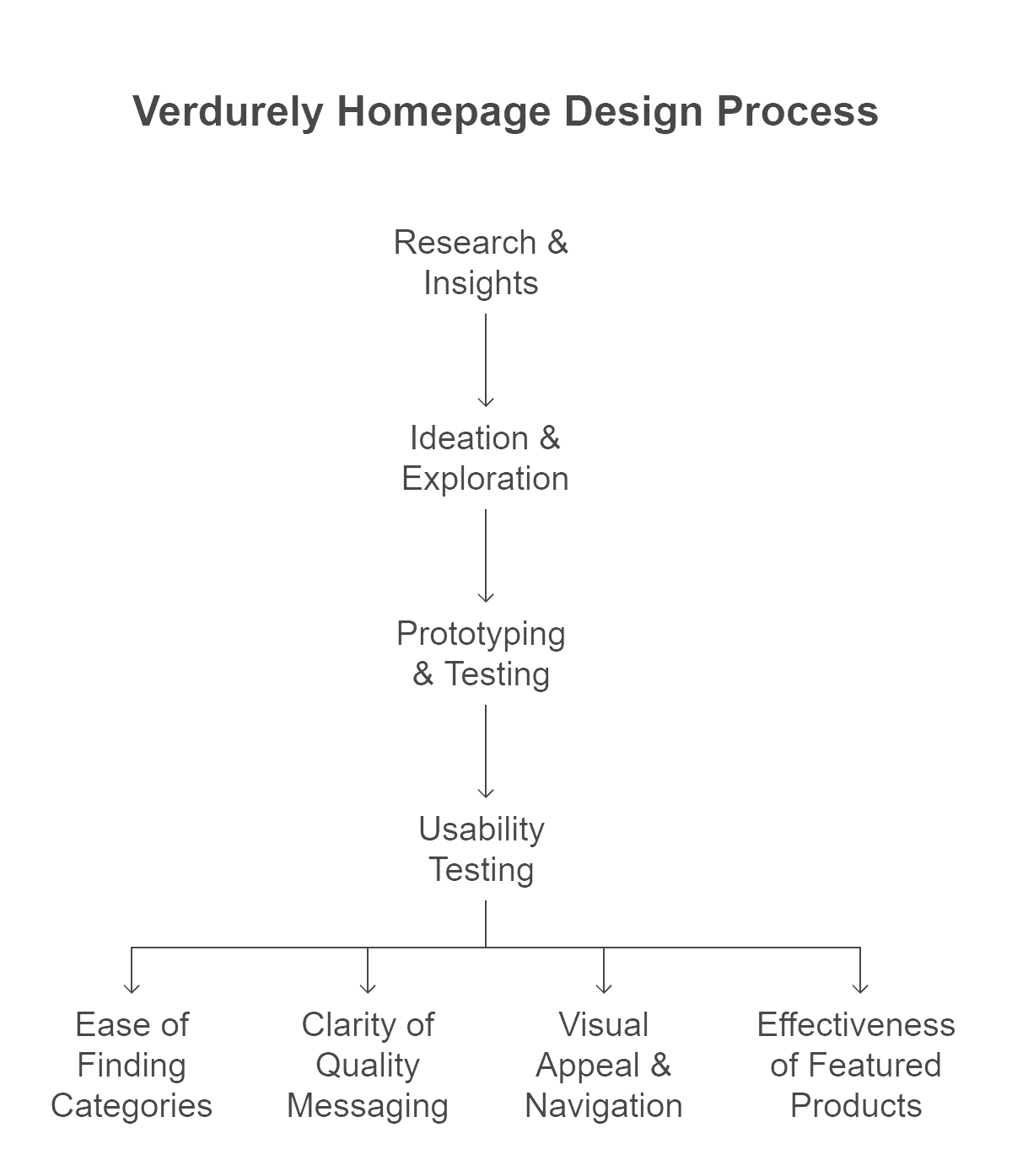
Research & Insights (Inferred from Market Analysis & Design Choices): Likely involved competitor analysis (reviewing sites like Ugaoo/Nurserylive ), identifying best practices (clear navigation, quality visuals, trust signals ), and understanding common user needs in the Indian context (e.g., interest in specific types like Air Purifying, Pet Friendly ). Key Insight: A clean, trustworthy presentation focusing on easy discovery and quality is crucial.  

Ideation & Exploration: (Hypothetical) Explored different homepage layouts, category structures, and ways to present trust signals effectively. Considered different visual styles before settling on the clean, modern aesthetic shown.

Prototyping & Testing: (Hypothetical but Recommended) Would involve creating interactive prototypes of the homepage design and conducting usability testing to validate:  

  • Ease of finding plant categories.

  • Clarity of quality messaging and trust signals.

  • Overall visual appeal and ease of navigation.

  • Effectiveness of featured product sections.
Key Design Solutions

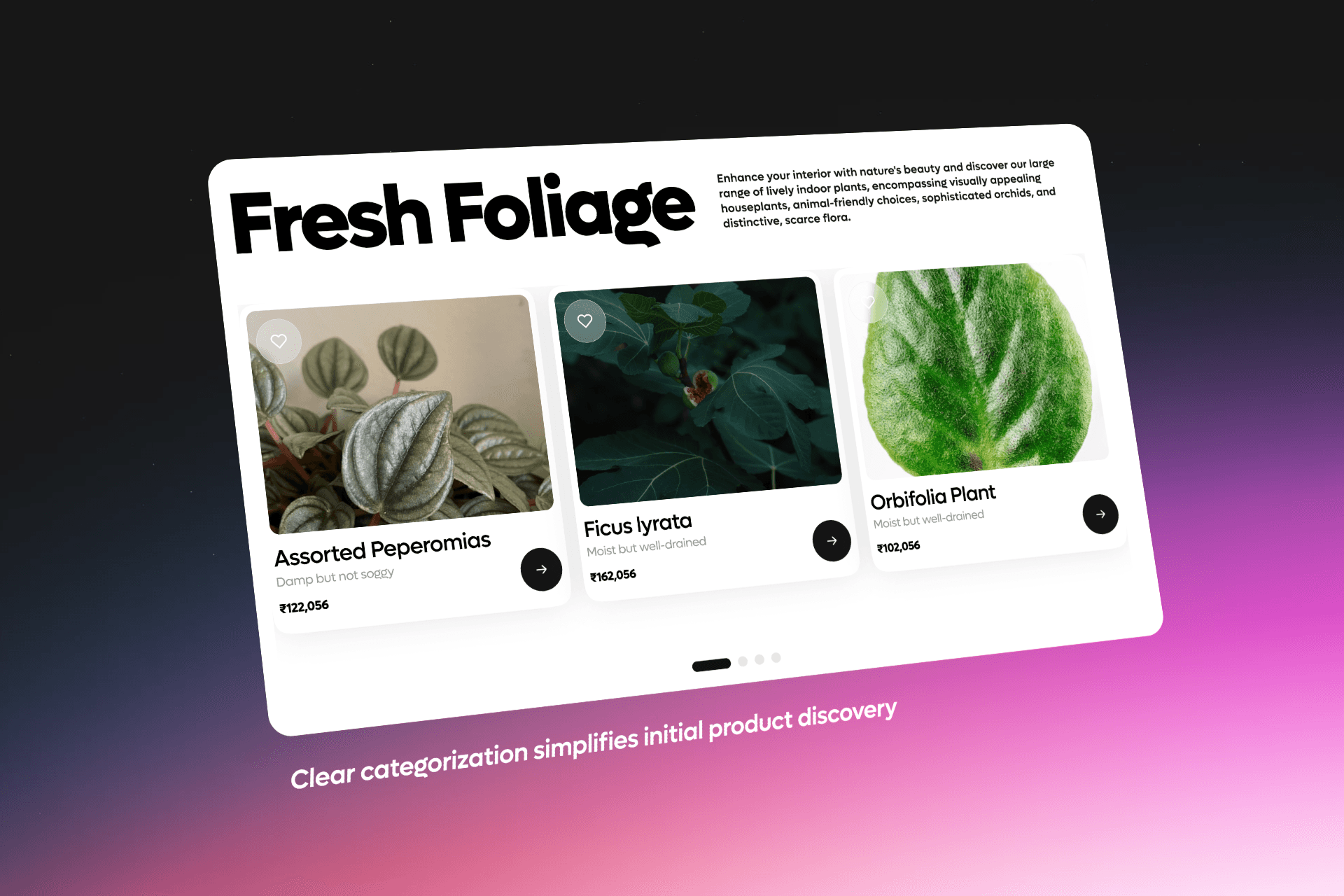
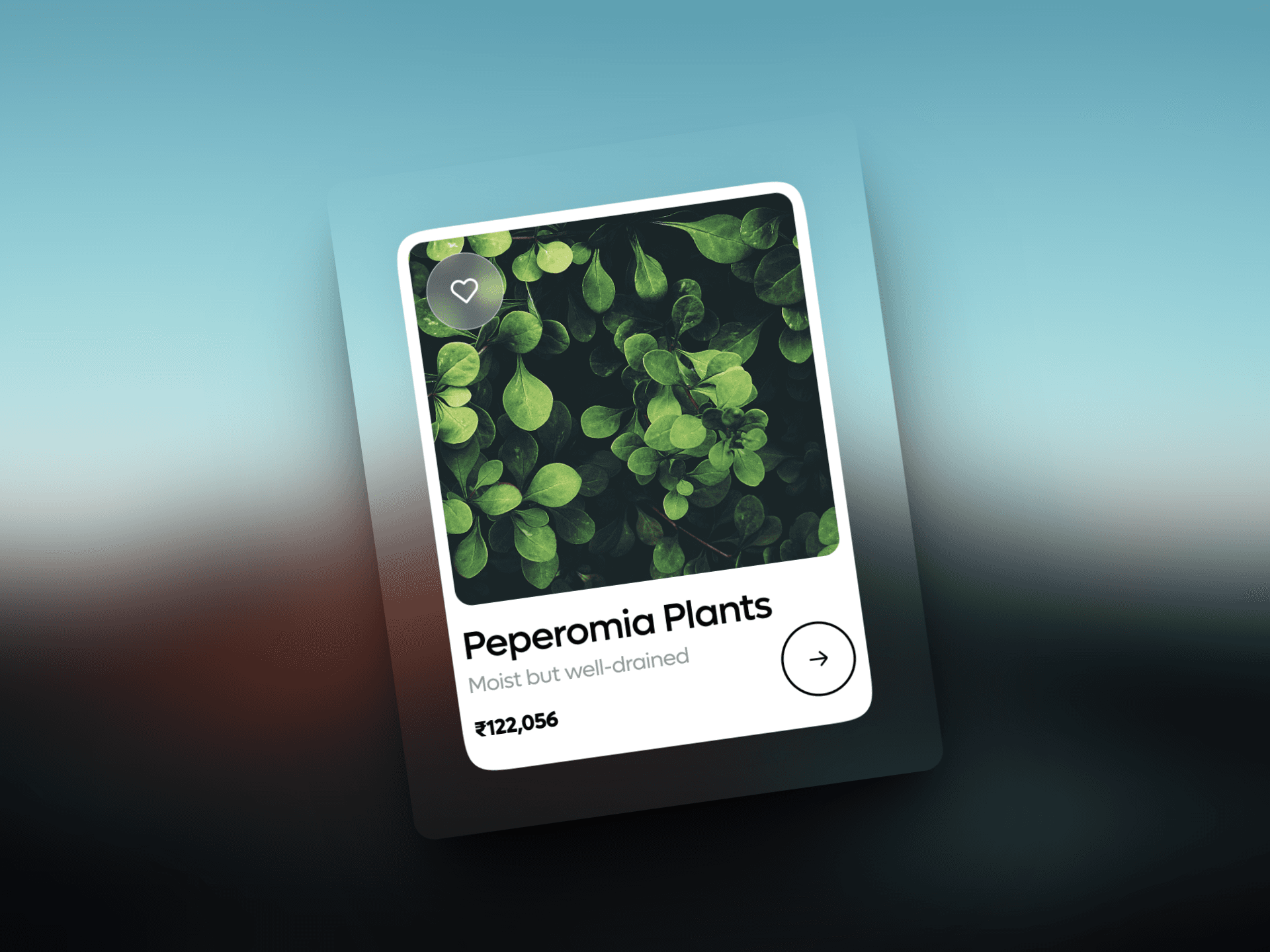
Visually Driven Product Showcase: Utilized high-quality images for featured products (" Fresh Foliage") and categories, displaying key information like name, price, and potentially ratings concisely. This aligns with best practices for visually selling plants online.

Pricing Card


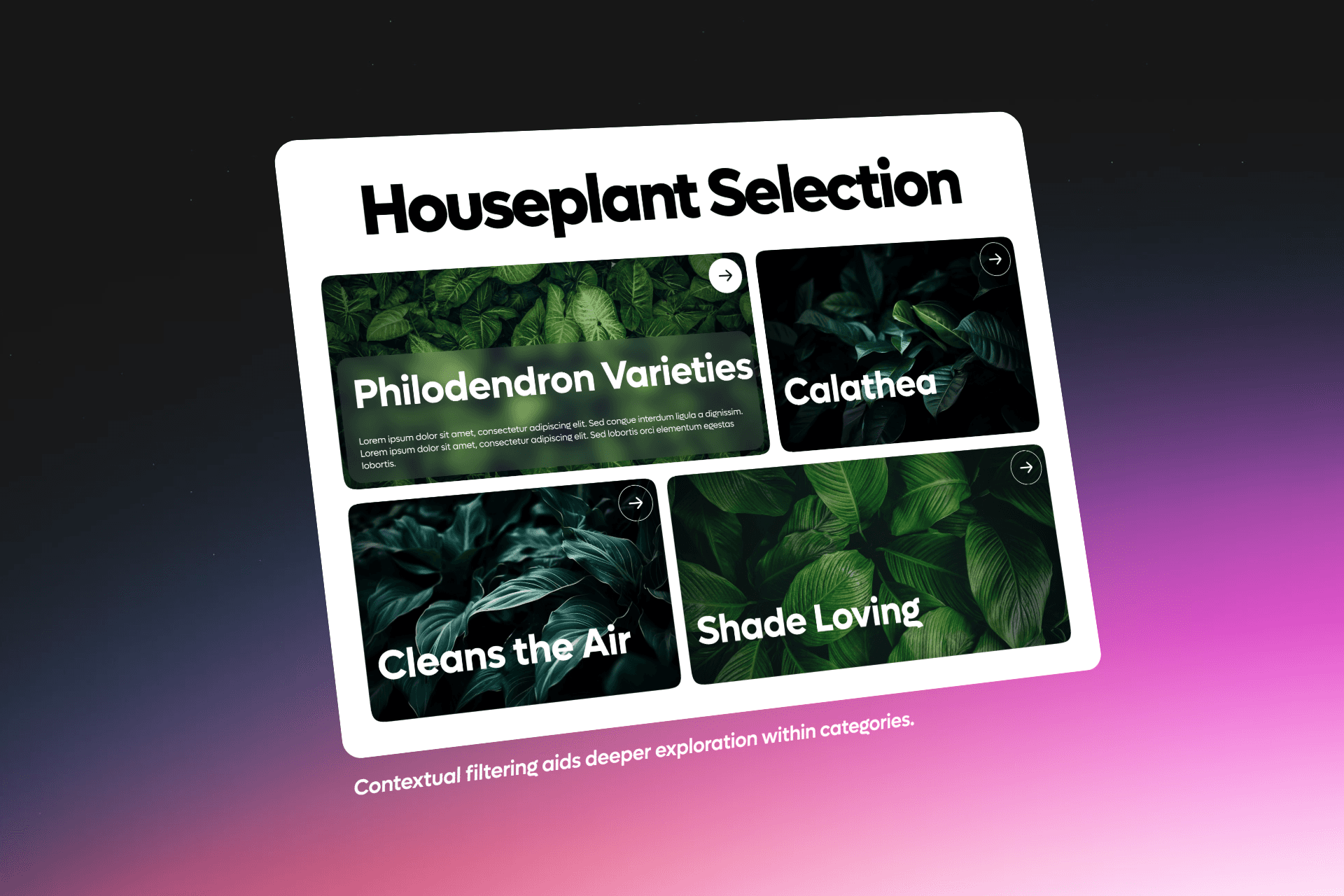
Contextual Filtering within Collections: Included filter-like tags (Philodendron, Calathea, Air Purifying, Low Light Tolerant) within the "House Selection" section, allowing users to refine their view based on specific attributes or plant types within a broader category.

Selection Category


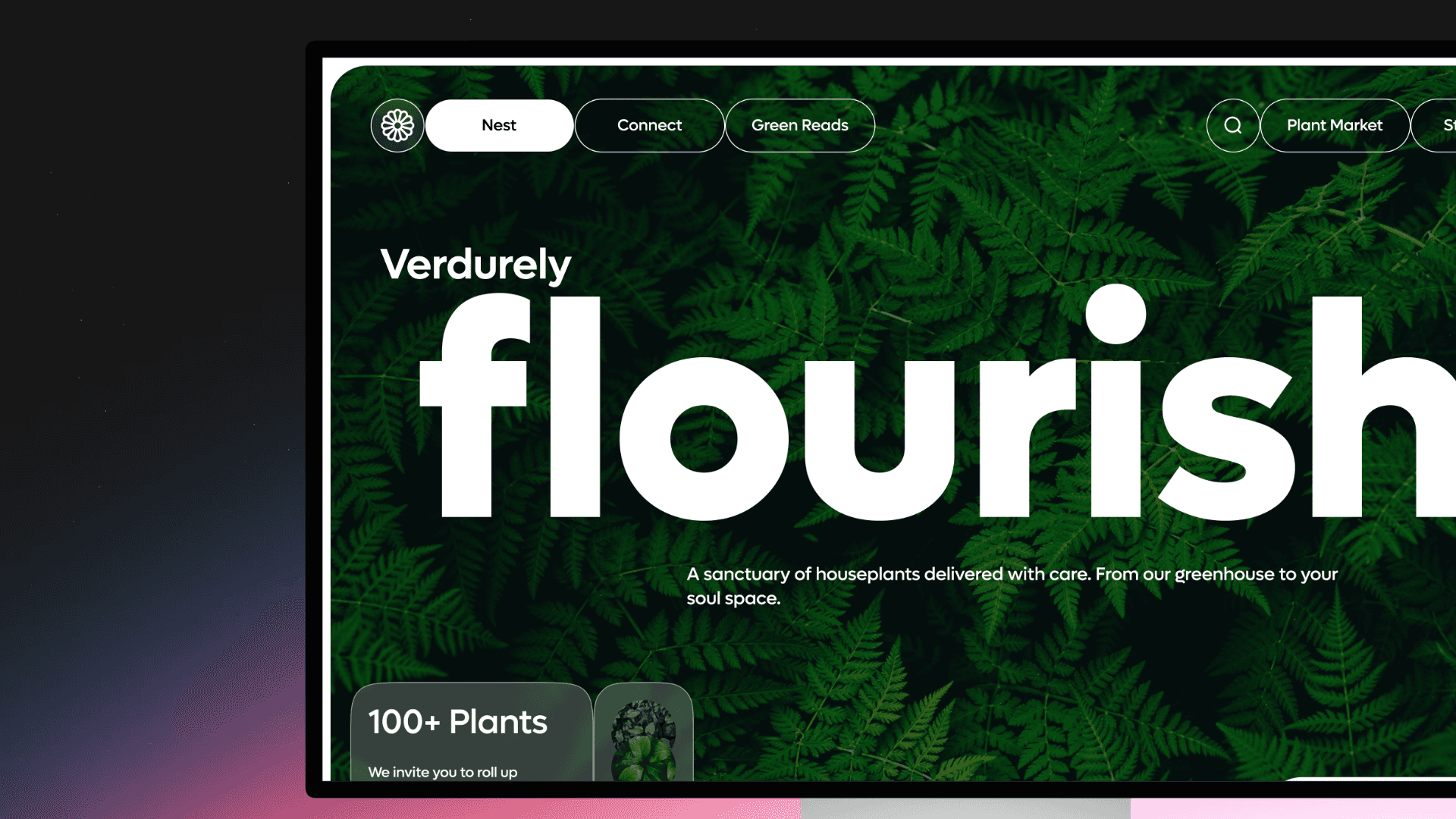
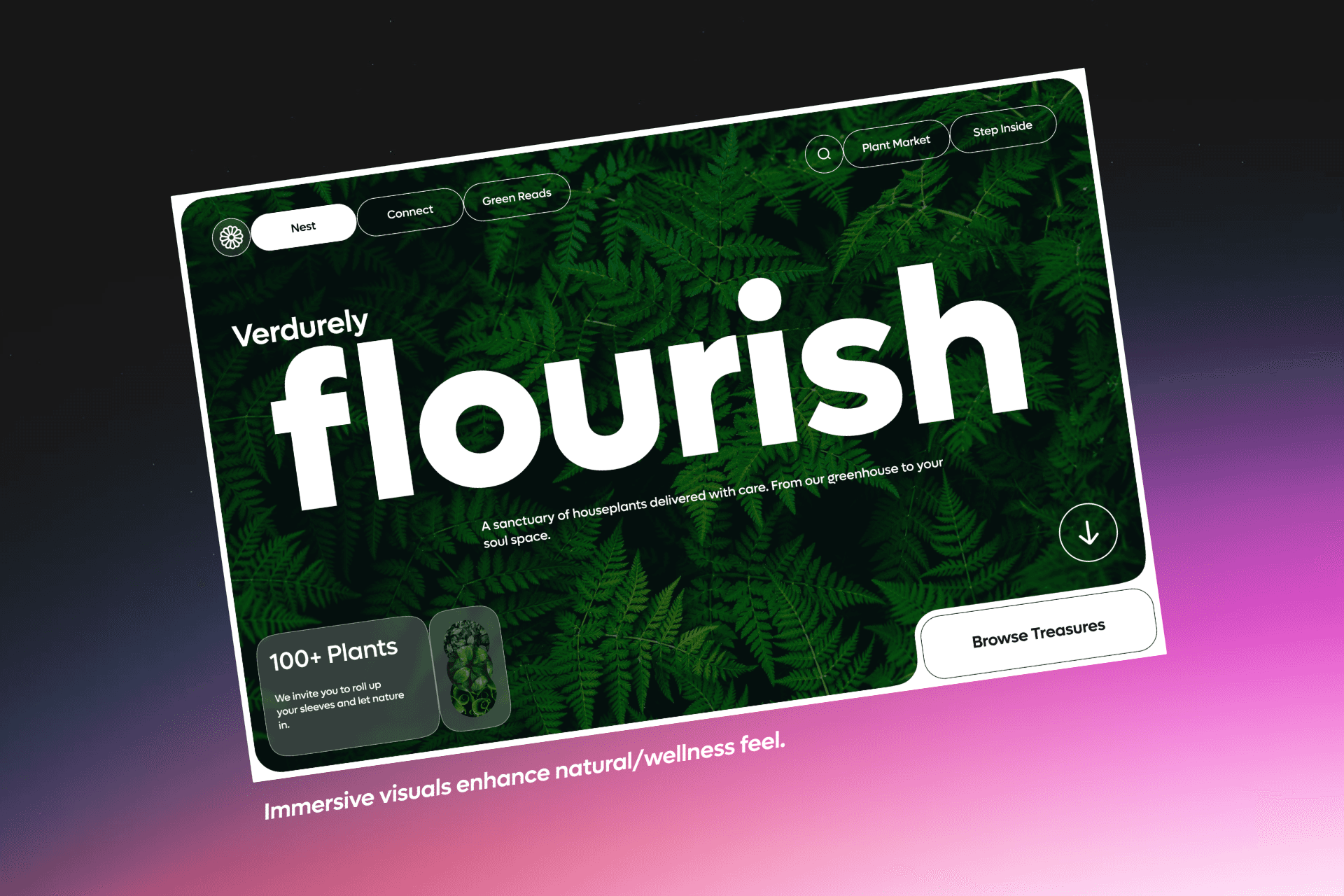
Establishing Strong Brand Voice & Emotional Connection: The hero section immediately establishes a distinct brand identity by using evocative language ("flourish," "sanctuary," "soul space," "treasures") and an immersive, lush visual background. Instead of a purely transactional focus, this approach aims to create an emotional connection with users seeking wellness and a connection to nature (a key market trend). It positions the brand as a curated "sanctuary" offering "treasures," differentiating it from more generic e-commerce platforms.

Hero Section


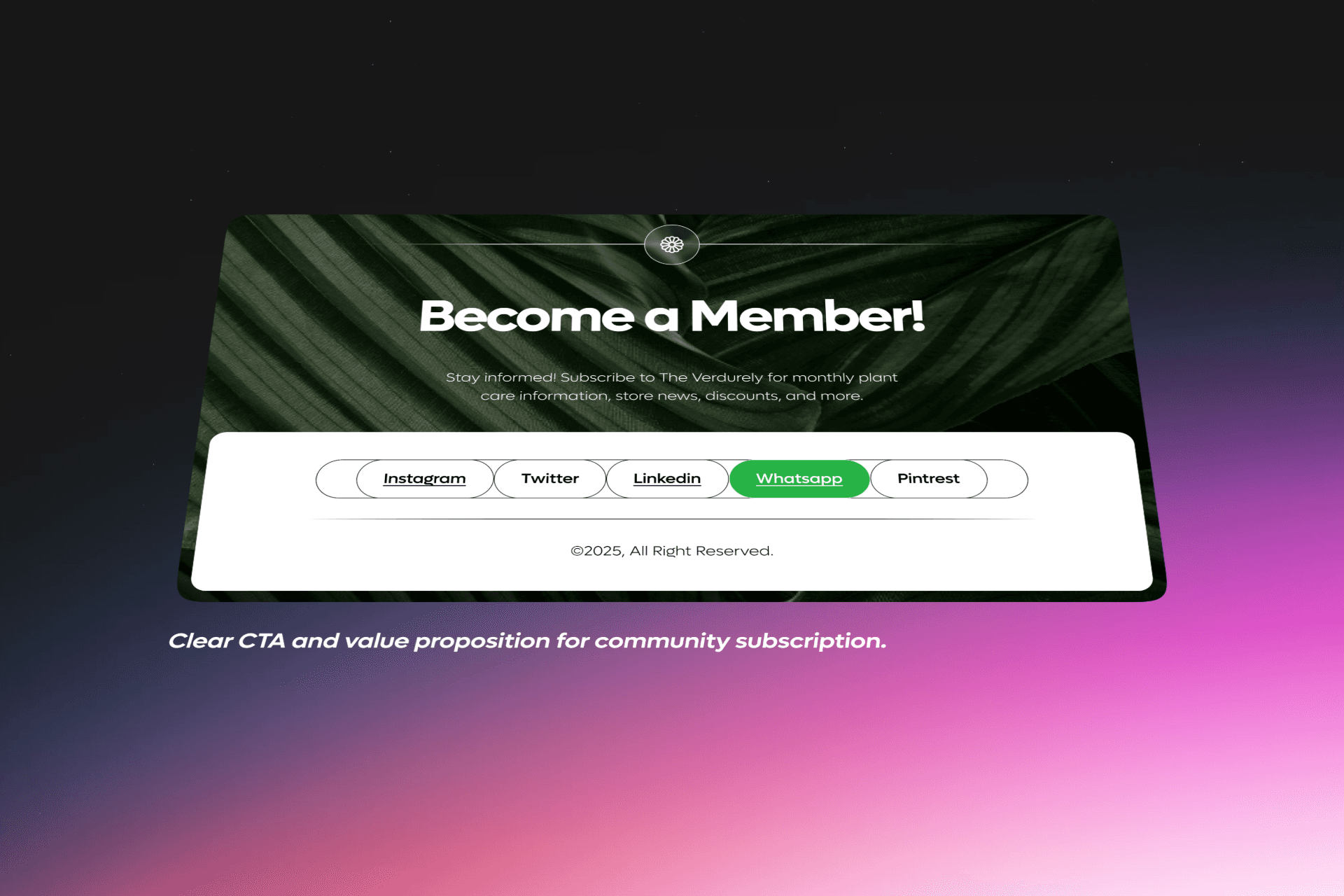
Fostering Community and Post-Purchase Engagement: This footer section explicitly focuses on building a relationship beyond the initial transaction. It features a clear call-to-action ("Become a Member! / Subscribe") with a strong value proposition (plant care info, news, discounts) to encourage newsletter sign-ups. Additionally, it highlights multiple social media channels (including WhatsApp), inviting users to connect and engage with the brand community across various platforms. This strategy aims to foster customer loyalty and repeat engagement, aligning with best practices for online retailers.

Footer

Key Design Solutions

Visually Driven Product Showcase: Utilized high-quality images for featured products (" Fresh Foliage") and categories, displaying key information like name, price, and potentially ratings concisely. This aligns with best practices for visually selling plants online.

Pricing Card


Contextual Filtering within Collections: Included filter-like tags (Philodendron, Calathea, Air Purifying, Low Light Tolerant) within the "House Selection" section, allowing users to refine their view based on specific attributes or plant types within a broader category.

Selection Category


Establishing Strong Brand Voice & Emotional Connection: The hero section immediately establishes a distinct brand identity by using evocative language ("flourish," "sanctuary," "soul space," "treasures") and an immersive, lush visual background. Instead of a purely transactional focus, this approach aims to create an emotional connection with users seeking wellness and a connection to nature (a key market trend). It positions the brand as a curated "sanctuary" offering "treasures," differentiating it from more generic e-commerce platforms.

Hero Section


Fostering Community and Post-Purchase Engagement: This footer section explicitly focuses on building a relationship beyond the initial transaction. It features a clear call-to-action ("Become a Member! / Subscribe") with a strong value proposition (plant care info, news, discounts) to encourage newsletter sign-ups. Additionally, it highlights multiple social media channels (including WhatsApp), inviting users to connect and engage with the brand community across various platforms. This strategy aims to foster customer loyalty and repeat engagement, aligning with best practices for online retailers.

Footer

Outcomes

Quantifiable Success

Key Metrics Goals: The design aimed to

  • Increase click-through rate (CTR) on category links and featured products.

  • Decrease homepage bounce rate.

  • Increase add-to-cart actions originating from the homepage.

  • Improve qualitative user feedback regarding ease of use and site aesthetics.

Quantifiable Achievements: (Hypothetical) A successful launch would ideally show metrics like:

  • "Achieved a 15% increase in category CTR."

  • "Reduced homepage bounce rate by 10%."

  • "Increased add-to-carts from homepage by 8%." (Note: These are illustrative examples, actual data is unavailable).

Business Value: (Hypothetical) Improved product discovery leading to increased sales; enhanced brand perception associated with quality and ease of use; better user engagement potentially leading to higher customer lifetime value.

Qualitative Feedback: (Hypothetical) Post-launch surveys or feedback would ideally indicate users find the site visually appealing, easy to navigate, and trustworthy.

Quantifiable Success

Key Metrics Goals: The design aimed to

  • Increase click-through rate (CTR) on category links and featured products.

  • Decrease homepage bounce rate.

  • Increase add-to-cart actions originating from the homepage.

  • Improve qualitative user feedback regarding ease of use and site aesthetics.

Quantifiable Achievements: (Hypothetical) A successful launch would ideally show metrics like:

  • "Achieved a 15% increase in category CTR."

  • "Reduced homepage bounce rate by 10%."

  • "Increased add-to-carts from homepage by 8%." (Note: These are illustrative examples, actual data is unavailable).

Business Value: (Hypothetical) Improved product discovery leading to increased sales; enhanced brand perception associated with quality and ease of use; better user engagement potentially leading to higher customer lifetime value.

Qualitative Feedback: (Hypothetical) Post-launch surveys or feedback would ideally indicate users find the site visually appealing, easy to navigate, and trustworthy.

Demonstrating Growth and Strategic Thinking

Key Takeaways

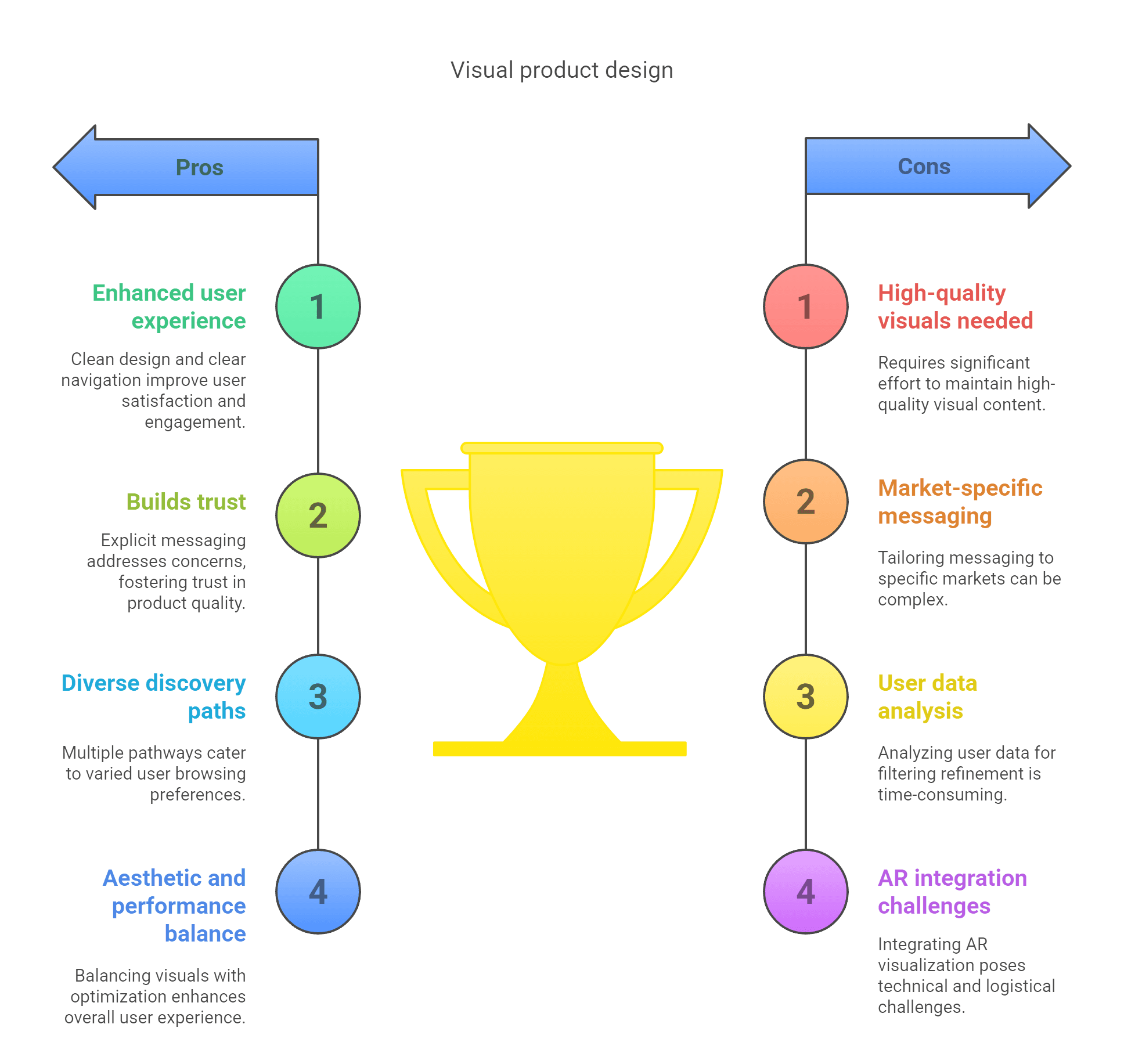
  • For visual products like plants, a clean, image-forward design combined with clear navigation is paramount.  

  • Proactively addressing market-specific concerns (like plant quality) through explicit messaging can build essential trust.  

  • Providing multiple discovery pathways (broad categories, featured items, specific filters) caters to different user browsing behaviors.  

  • Balancing aesthetic appeal with performance optimization (image loading) is critical.  

Future Implications: Learnings reinforce the importance of maintaining high-quality visuals and accurate information. Future iterations should involve A/B testing different featured products/categories, refining filtering options based on user data, and potentially integrating more user-generated content (reviews with photos) to further enhance trust.  

Areas for Future Exploration: Integrating detailed plant care guides linked from products, adding advanced search filters (size, specific care needs), exploring AR visualization, building out community features, and optimizing the mobile experience.


Key Takeaways

  • For visual products like plants, a clean, image-forward design combined with clear navigation is paramount.  

  • Proactively addressing market-specific concerns (like plant quality) through explicit messaging can build essential trust.  

  • Providing multiple discovery pathways (broad categories, featured items, specific filters) caters to different user browsing behaviors.  

  • Balancing aesthetic appeal with performance optimization (image loading) is critical.  

Future Implications: Learnings reinforce the importance of maintaining high-quality visuals and accurate information. Future iterations should involve A/B testing different featured products/categories, refining filtering options based on user data, and potentially integrating more user-generated content (reviews with photos) to further enhance trust.  

Areas for Future Exploration: Integrating detailed plant care guides linked from products, adding advanced search filters (size, specific care needs), exploring AR visualization, building out community features, and optimizing the mobile experience.


Visuals from Website

Visuals from Website

happy cta
happy cta
happy cta
happy cta
some faq
some faq
some faq
some faq
tag
tag
tag
tag
happy cta
happy cta
happy cta
happy cta

Create a free website with Framer, the website builder loved by startups, designers and agencies.